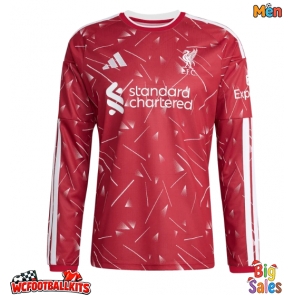
The red shirt that has to survive a season, not just a matchday
There are kids who watch football, and there are kids who watch Liverpool. The second group is easy to spot. They sing the songs badly but with total commitment, they know which number belongs to whom, and they will argue with you about whether Anfield is the best ground in England. Once a kid like that decides they need the shirt, the question is not whether they get one. It is how you buy it without spending a fortune on something they will outgrow in a year.
And that is where most parents start doing maths in their heads. The official shirt costs a lot. The kid will wear it four times a week. It will get washed constantly, dragged through mud, used as a pillow on away trips. Paying full price feels like a lot for something that might not survive until spring. So people start looking for something cheaper, and then they worry that cheaper means it will fall apart after two washes. Sometimes it does. But not always, and the difference is mostly in knowing what to look for.
Start with the fabric, because that is where cheap shirts usually fail. A decent replica, even a budget one, uses polyester with recycled fibres that dries quickly and does not hold smell the way cotton does. That matters when the shirt is being washed three times a week. The problem is that the very cheapest versions use a thin, shiny fabric that neither breathes nor keeps its shape. After a few washes it starts to pill and go saggy. If the product description mentions a fabric weight or a small percentage of elastane, that is a good sign. It sounds like a detail for picky people, but it is exactly the detail that decides whether the shirt still looks fresh in May or looks tired by November.
The fit is the next thing. Football shirts are cut for footballers, which means they tend to be tight across the shoulders and a bit roomier around the middle. On an adult who trains, that works. On a teenager who is growing in spurts, it gets weird fast. Plenty of cheap replicas also use the same cut regardless of size, so a medium can fit like a small across the chest and like a large around the waist. If you are buying for someone who will actually play in it, look for models with a slightly looser shoulder seam. It does more for comfort than most people expect.
The print on the back is its own story. The number and the name are the main thing for a lot of kids, but it is also where the cheapest versions cut the most corners. Prints that peel after three washes or names that fade into nothing are more common than anyone would like. If you want a print that lasts, look for versions with heat-pressed vinyl or an embroidered number. It costs a little more, but the difference is obvious after a month or two.
Colour choice matters too, and not just aesthetically. Light shirts show dirt faster and need washing more often, while dark shirts hide stains better but can fade unevenly. If the shirt is going to be worn hard, it is worth thinking about how it will look after ten washes, not just how it looks in the photo.
Another thing people forget is that football shirts are often bought in the wrong size. Either too big, because the thinking is the kid will grow into it, or too small, because people underestimate how much a kid moves. A shirt that fits badly gets left in the drawer, no matter how nice it is. Better to buy one that fits now and add another when it is needed.
As for where to shop, there is plenty of choice. The official club shops are expensive but reliable. Then there is a whole range of smaller online stores that specialise in replicas and cheaper alternatives. Quality varies, but there are plenty of good options if you are willing to read reviews and look at photos from real use. That is where you find the shirts that actually hold up, at prices that do not require a loan. A cheap Liverpool FC jersey does not have to mean a bad one, as long as you know what separates the two.
One tip that has worked for a lot of people is to buy the shirt as a gift at the start of the season rather than as an impulse buy after a big win. That way it gets associated with something positive, gets worn hard through the autumn, and stays in better shape because it is not being worn daily from November to spring.
Related Products